
Key Takeaways
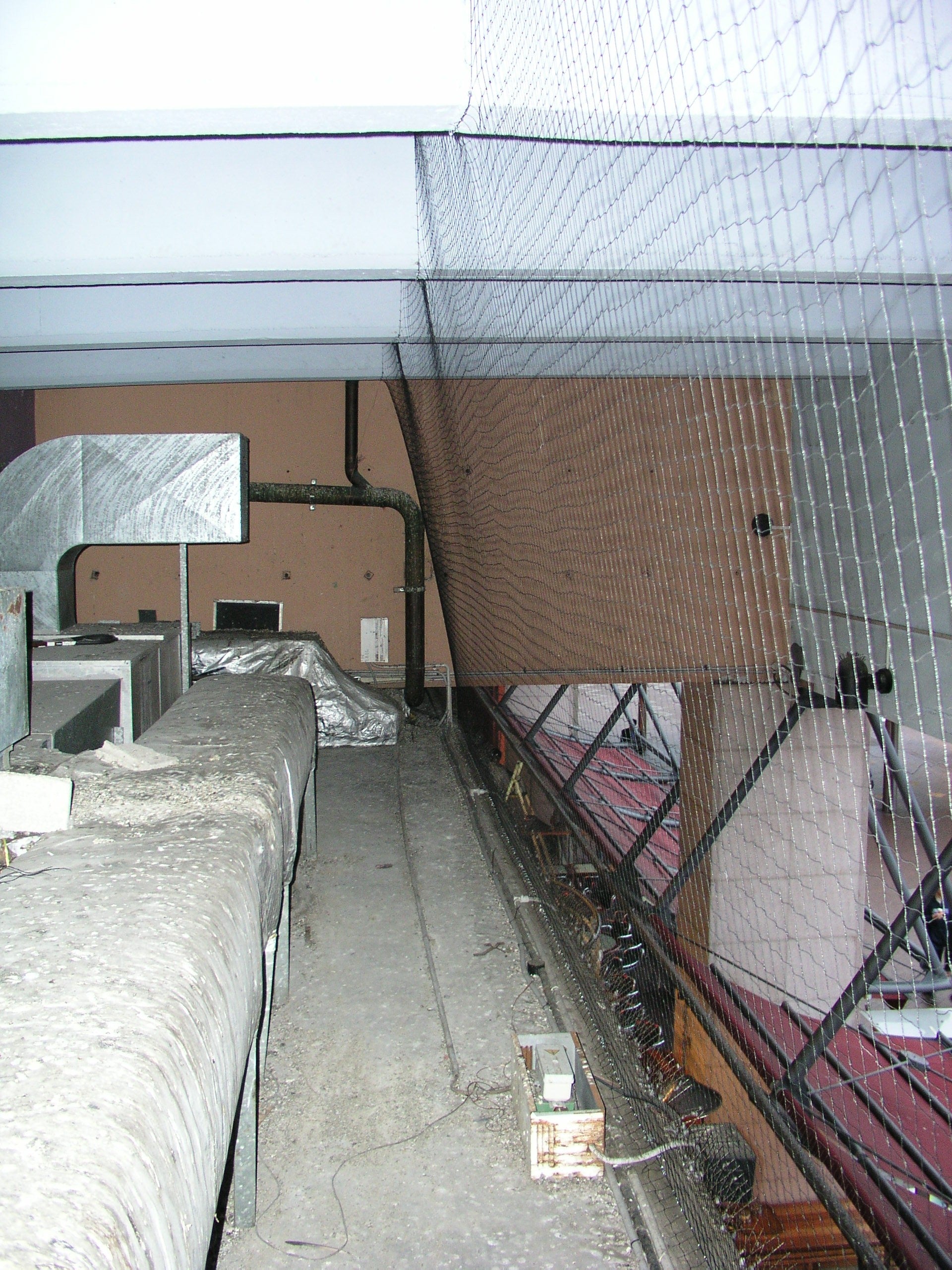
Every install teaches the bird something. Complete coverage decides whether the lesson is closed or safe at the corner.
What one bird learns, the flock learns. A single gap is shared within days, so it never stays one bird's secret.
Habituation is the deterrent killer. A scare with no real consequence becomes background, and the bird feeds under it.
The more a bird wants to stay, the faster it learns a deterrent is bluffing. High pressure is an exclusion job.
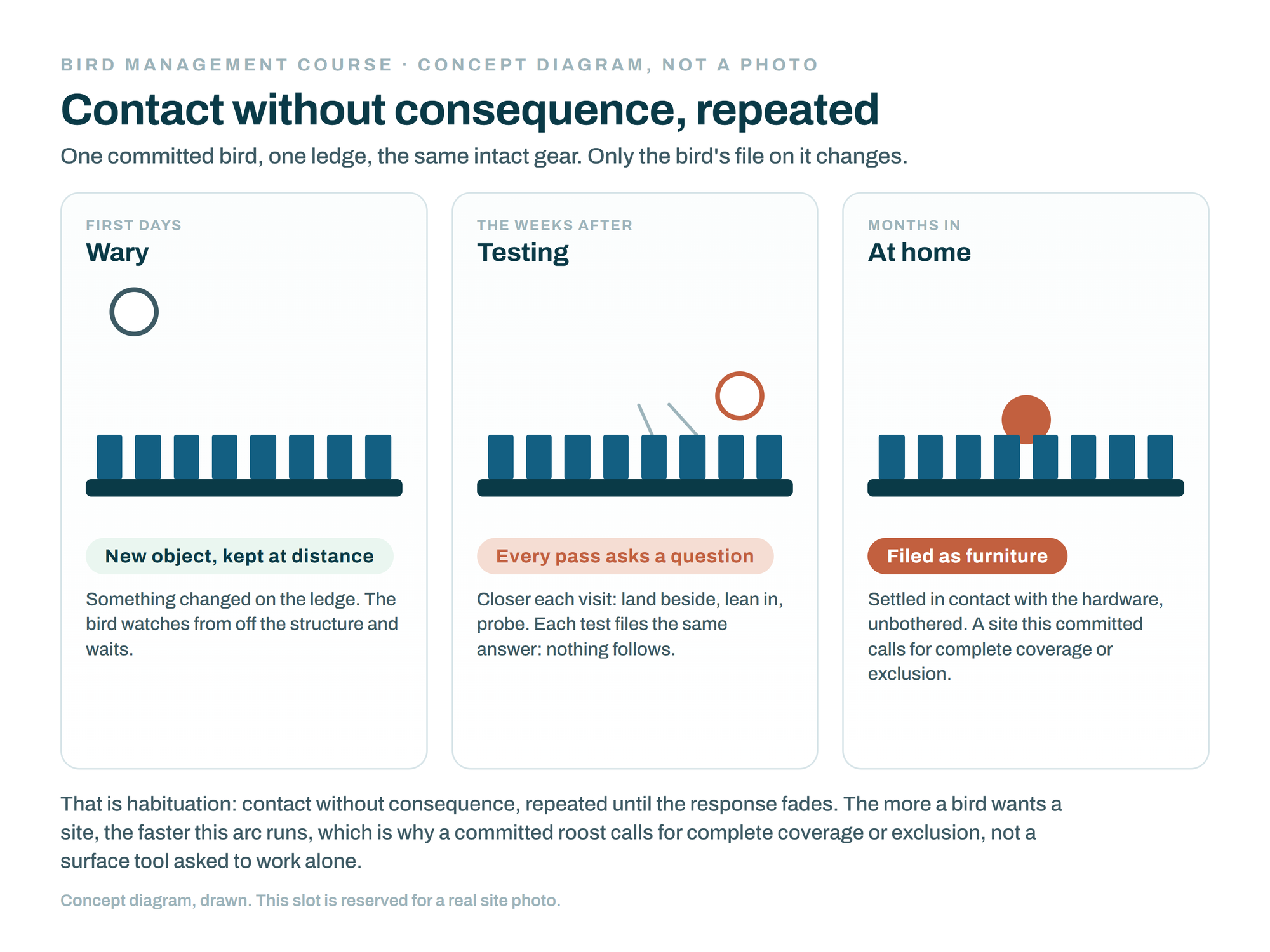
Most installers meet this moment early. You put in something solid, spikes, wire, a scare unit, and for a week or two it works. Then the birds are back. Not because the product failed. Because they worked out how to live around it.
That is not bad luck, and it is not a knock on the gear. It is the bird doing exactly what a bird does: testing what is new, remembering what it finds, and sharing it with the flock. Session 1 gave you the pressure read, the four drivers and the ladder. This session gets inside the animal you are reading, because on most of your sites the sharpest thing going is not the client or the builder. It is the bird.
Get how a bird learns and one rule falls out of it, the rule that decides whether a system holds or hands the birds a map.

So the question this session turns on is not what will move this bird. It is what this bird will learn from what you put up on that ledge. You are not only fitting a product. You are running a test, and the bird marks it. Every point it probes returns a verdict: dead end, or way in. Cover every point and that verdict, everywhere, is closed. Leave one gap and the verdict is open at the east corner, and that answer travels to every bird watching.
Before you read on, bring a beaten system with you
Think of a job where a good system got worked around. Birds back over, under or beside something solid within a few weeks, and it was sound gear, fitted sound.
Not why they came back. What did they find that let them live with it? A gap? A bluff? A safe corner one bird found and the rest copied?
Hold onto that site. We come back to it near the end.
Every install is a test, and the bird marks it
Birds are not just reacting to what is in front of them. They test their surroundings, remember what they find, and read what other birds find. Two parts of that decide whether your work holds.
The first is consequence. A bird meets something new on a familiar ledge, and its next move is set by what happens when it lands. Something sharp, or a real jolt, and it files that spot as a dead end. Nothing at all, and it files the opposite: this is fine. So a gap does more than let one bird in. It teaches.
The second is the flock. What one bird learns does not stay with one bird. Others watch, follow and copy, and a single weak point becomes shared knowledge within days. The good news is that it runs both ways. When the first birds to probe a fresh install meet a complete, consistent deterrent at every point they try, the whole flock reads the site as closed. A clean install does not just stop the bird in front of you. It sends the message to the ones you cannot see.
Complete coverage is not a detail of the job. It is the message the whole flock reads.
The smartest birds on your sites are ours
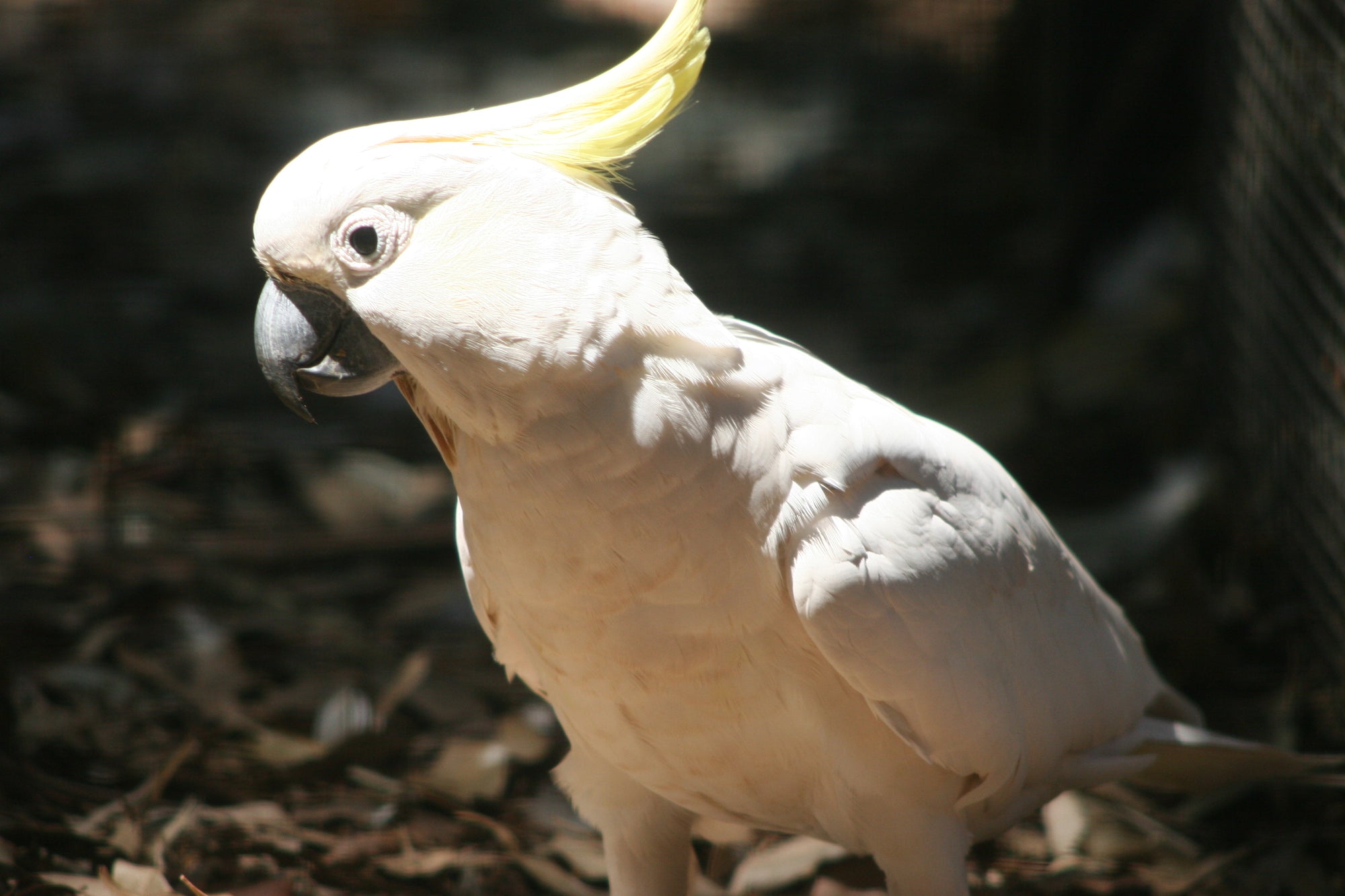
Read the mind, not just the species. Australia's pest birds sit at the clever end. Sulphur-crested cockatoos and corellas problem-solve, remember, and copy each other; our ravens are corvids, the cleverest family of birds going; and the common myna has adapted hard to our towns. Most overseas deterrence research was built on pigeons and starlings elsewhere, for less flexible animals. Good work, but it can undersell what one of ours will do to a system it decides is worth beating. Design for the animal in front of you.
The deterrent that gets ignored, and why
There is a second thing every bird does, and it is the one that catches good gear out. Habituation: a bird learns to ignore anything that happens with no meaningful consequence.
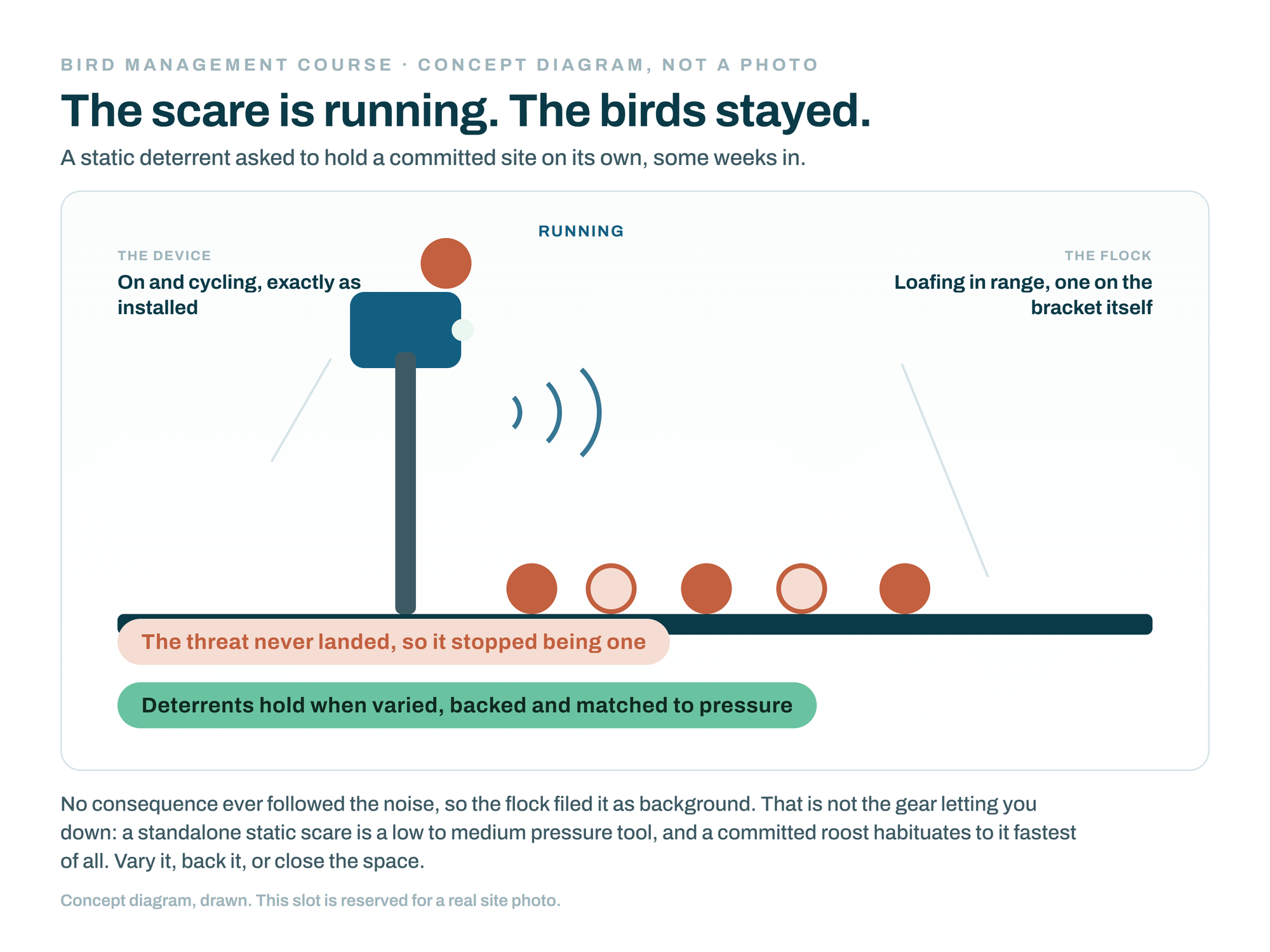
A scare device makes a place feel unsafe for a moment. If nothing real ever follows, the bird files it as harmless. A gas cannon on a timer moves a flock off the fruit for the first few days, then the birds notice the bang is followed by nothing, and within a couple of weeks they feed under it. The response has not just faded, it has flipped: the sound now means feeding time, because that is what they were doing when it went off.
The key words are no meaningful consequence. Birds do not habituate to things that are genuinely, reliably threatening. Most scares are not, unless something real backs them; on their own they are a noise or a flash, and a bird sorts that out quickly.

There is a second thing every bird does, and it is the one that catches good gear out. Habituation: a bird learns to ignore anything that happens with no meaningful consequence.
A scare device makes a place feel unsafe for a moment. If nothing real ever follows, the bird files it as harmless. A gas cannon on a timer moves a flock off the fruit for the first few days, then the birds notice the bang is followed by nothing, and within a couple of weeks they feed under it. The response has not just faded, it has flipped: the sound now means feeding time, because that is what they were doing when it went off.
The key words are no meaningful consequence. Birds do not habituate to things that are genuinely, reliably threatening. Most scares are not, unless something real backs them; on their own they are a noise or a flash, and a bird sorts that out quickly.
Four things to carry onto every site from here
Assume the bird will probe your install. Complete coverage is the standard, not the aspiration, and every gap gets found, fastest where the pressure is highest.
Match the tool to the way the bird learns. A scare works on surprise and is undone by habituation, so it earns its place at low to medium pressure as part of a backed, varied system, not as a standalone answer to an established roost.
Get the history before you quote. A bird on a site for three seasons is a different animal from one that arrived last month, and only a person can tell you which. Ask.
Think about the lesson your install leaves behind. A complete, consistent system teaches the flock the site is closed. A gappy or bluffing one teaches it exactly where to go next. You are always teaching. Decide what.
Field Note
Peter puts the corvid version of this bluntly. Crows and ravens are the clearest case of a flock learning as one. They are cautious birds that will sit off a site and watch it a long time before they commit, and they watch each other while they do it. Put a system up with a soft edge and assume it is being assessed, not just by the bird you can see but by several you cannot, and that the day you leave a gap is the day it gets found and passed around. It is also why a clean, complete job on a corvid site pays for itself: you are teaching a very good learner one clear lesson, instead of handing it a puzzle to solve.
"Peter McCarthy: on a corvid site, assume every gap is being watched, and found the day you leave it."
Peter Mccarthy
About this series
This session is part of the Bird Management Course by Pest IT. It draws on "A Guide to Pest Bird Management" (2021) by Peter McCarthy and Dr Sali Bache, and on the field record behind it. The account of sulphur-crested cockatoos learning to flip open kerbside bins, and that trick spreading between Sydney suburbs by birds copying birds, is documented in Klump and colleagues, "Innovation and geographic spread of a complex foraging culture in an urban parrot," Science, 2021. That birds habituate to acoustic scarers such as gas cannons once the noise is not backed by a real consequence, and that the same devices stay useful for short-term and lower-pressure work, is drawn from a 2003 review for the UK Department for Environment, Food and Rural Affairs by Bishop, McKay, Parrott and Allan. Corvid intelligence is well documented in overseas species such as the American crow; how our own ravens read a site is reported here from field experience rather than from a published Australian study. Where a species' legal status comes up, it varies by state and territory and by situation, so confirm the current position before you act on it, and the law sessions later in this module cover it in detail. The distribution-centre walkthrough is a composite of jobs of this kind, built to carry the teaching rather than to describe one identifiable site.