
Key Takeaways
Food. What the site feeds them, on a timetable they can rely on.
Water. A puddle, a blocked gutter, a leaking tap. The driver almost nobody looks for.
Shelter. Dry, warm, and out of reach of anything on the ground.
Tenure. How long they have been at it. The one that gets skipped, and it changes your answer most.
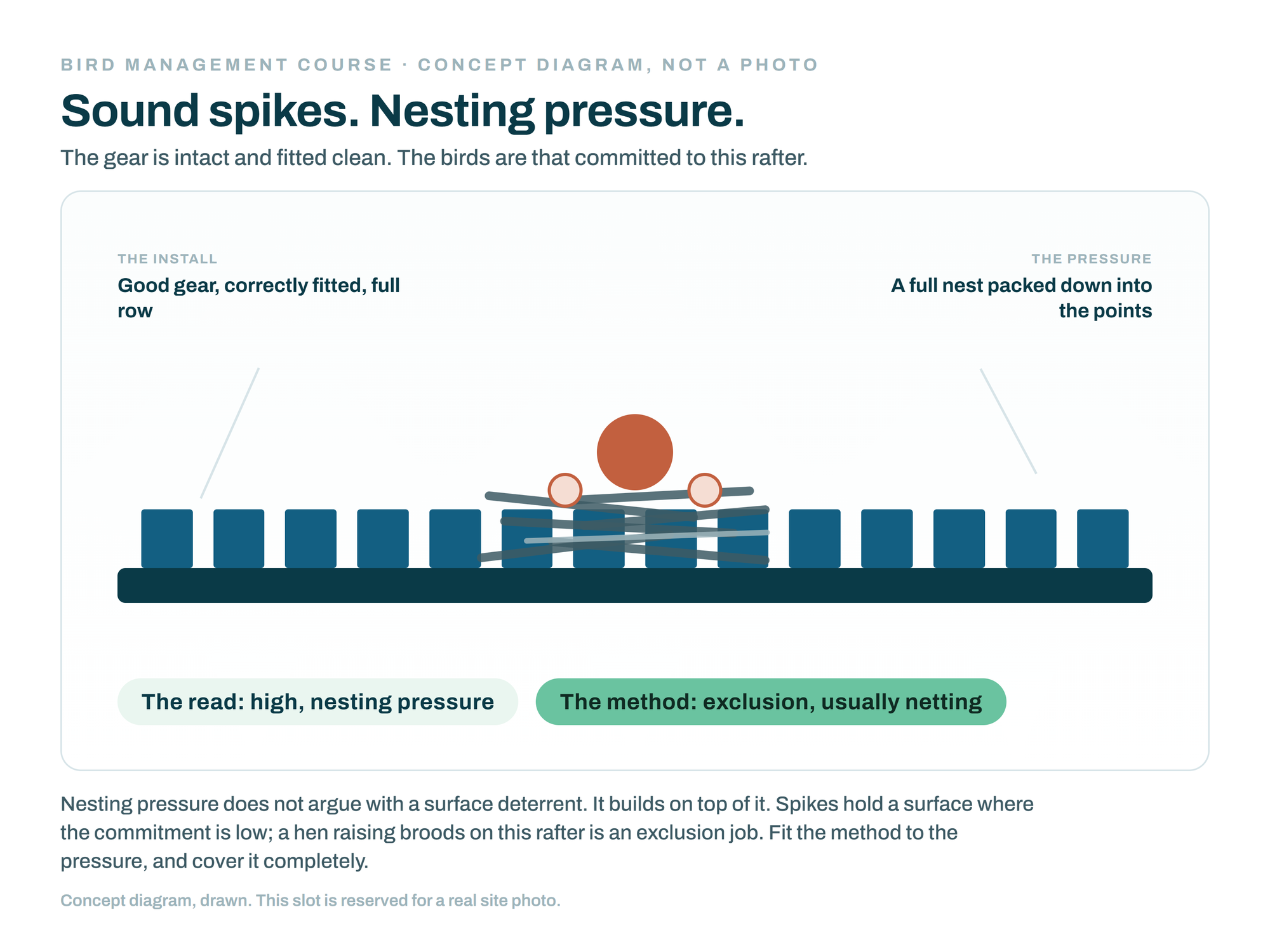
The third set of spikes went on in March. I got up the ladder in August and put my face about a metre from them.
Stainless steel, a good product, fitted straight and clean along the top flange of the rafter. Sitting in the middle of that row, wedged down into the points until you could not see them any more, was a pigeon nest. Sticks, a length of tie wire, a strip of shade cloth off the yard. Two squabs in the middle of it. The hen watched me come up the ladder and did not move. She had raised broods on that rafter before, and a bloke on a ladder was not new information.
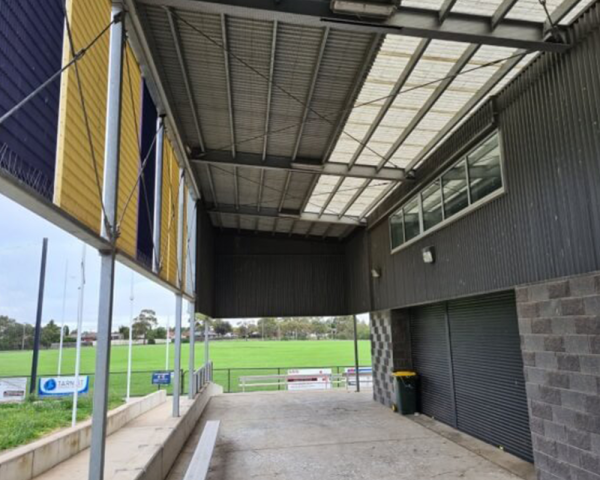
Forty metres of covered walkway at a primary school in Melbourne's outer east, between the classroom block and the hall. Three sets of spikes in four years, each one a Saturday, a lift hire and a crew. In between, the walkway pressure washed four times a year. One term the school roped off half of it and walked the kids the long way to the hall, because a wet walkway under a roosting flock is a slip waiting to happen. Add up the installs and the washing and that school had paid for the fix several times over without ever buying it.
Here is the part most people miss looking at a photo like that. The spikes were not bad spikes. They were fitted to a ledge, and a ledge is a thing you can measure. They should have been fitted to a question, and nobody had asked it.
Before you read on, bring a site with you
Think of a site where the birds were dug in. Not one you moved off a fence. One where they had made themselves at home and the client was over it.
What was keeping them there? Not why they turned up. Why they stayed.
Hold onto that site. We come back to it twice.
Same bird. Different pressure. Different method.
What holds a bird to a place
Four things. Food on site, water on site, shelter on site, and tenure, which is how long they have been at it.
That is the whole model. Everything else in this series is you applying those four. At the school all four were in plain sight once you knew to look.
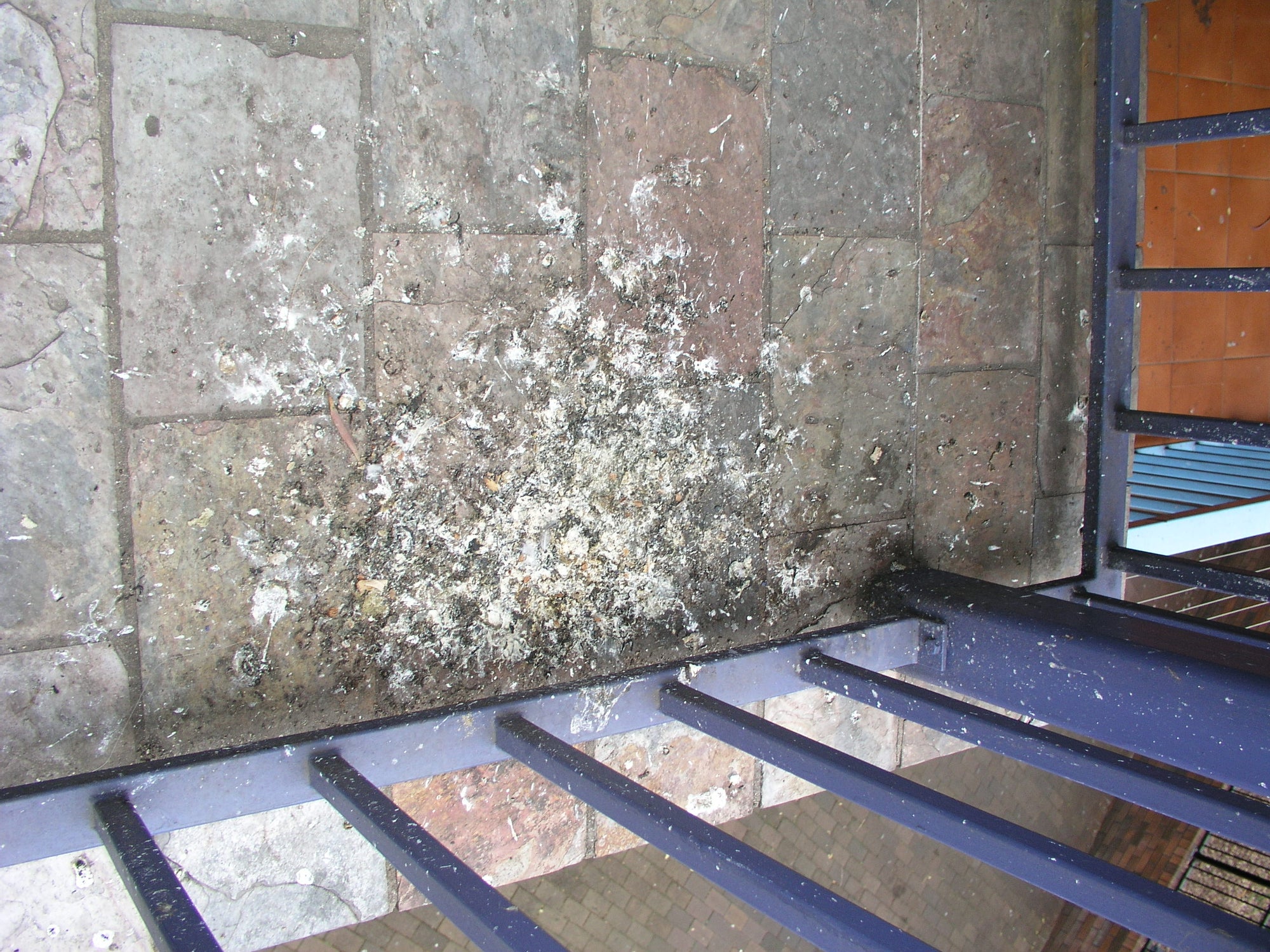
Food. Dropped lunches under the tables every school day. A skip behind the canteen with a lid that would not close. Two or three kids who thought feeding them was the best part of lunchtime.
Water. A leaking drinking tap making a puddle that never dried, and a blocked downpipe holding water in the gutter above.
Shelter. The walkway roof. Dry in the rain, warm in the afternoon, and nothing on the ground could reach them.
Tenure. The groundsman told me they were there when he started. He was nine years in.
Tenure is the one that gets skipped, and it changes your answer most. Food, water and shelter you read off a walk around. Tenure you have to ask a human being for, and if you do not ask, you do not get it. A flock that has bred on a site for years has generations of birds who know no other home. You are not moving them off a ledge, you are moving them off the address they were born at.
Which is why the same species is two different jobs. A pair that turned up last week has nothing holding it. A flock that has fed, drunk, sheltered and bred there for nine years has everything holding it.
Field note
Check the humans first.
A great many urban bird problems are being fed by somebody. A propped skip lid. A bin emptied Fridays that overflows Wednesdays. A staff member putting bread out at smoko for six years who has no idea it is connected. Ask, do not accuse, because it is nearly always kindness and they usually stop once they understand. It is the only fix in this trade that costs nothing, and now and then it drops the pressure a whole level on its own.
Read the pressure for the bird in front of you
One trap worth closing now, because it catches good operators.
Pressure is read per species, not per site.
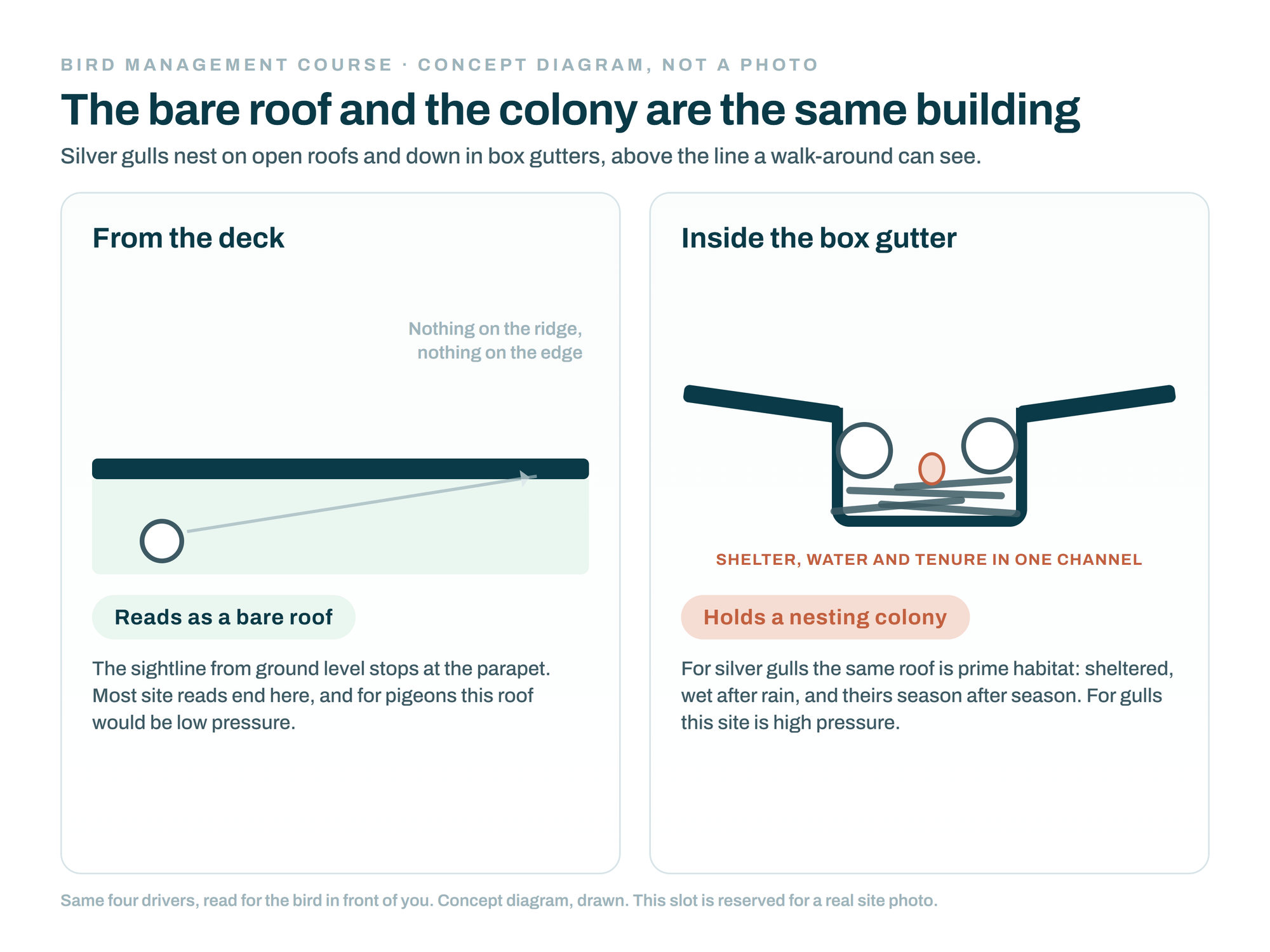
An exposed metal roof with no food is low pressure for pigeons. Put silver gulls on it and the same roof is prime habitat, because gulls nest on open roofs and down in box gutters. For gulls it is high.
Same four drivers. What changed is what counts as food, water and shelter to the bird in front of you.
So whenever you hear a pressure call, including your own: for which bird?
The ladder: what commitment looks like from the ground
Commitment is not on or off, it climbs. Four rungs, and each looks like something specific. Learn the picture, not the label.
Investigating. Two pigeons on the parapet of a new fitout for ten minutes on a Tuesday, having a look at the awning that went up last week, then gone. Nothing on that ledge but their footprints in the dust. Low pressure.
Roosting. The same birds on the same beam most nights now, and a first faint streak on the wall underneath. A preference is forming, and the window for a cheap fix has started to close. Low to medium.
Established roosting. They are there before you are. Droppings under the beam crusted, not fresh, feathers and dropped material on the floor. This place is part of their day, every day. Medium to high.
Active nesting. Sticks. An egg. A bird that does not leave when you put a ladder up. High, full stop.
About this series
This lesson is part of the Bird Management Course by Pest IT. It draws on "A Guide to Pest Bird Management" (2021) by Peter McCarthy and Dr Sali Bache, and on the field record behind it; where legislation or product registrations have moved since 2021, we verify and update before publishing. The school walkway story is a composite of real situations rather than one specific job, built to carry the teaching. A free knowledge quiz and a free training module sit alongside this series on the Pest IT site.